The Enduring Sound of the Grateful Dead

Happy Thursday to all you lovely subscribers and readers of Is This Real. Hope the day is treating you well. I'm watching hopefully for the wildfire smoke to dissipate in the outside air and praying for the temperatures to start trending downward. Other than that, all is well.
If you're looking for more of my writing, I have a piece in this week's Willamette Week about an upcoming hip-hop sound bath led by rapper Born I, and a piece at the Portland Mercury about the departure of saxophonist Joe Cunningham from local jazz band Blue Cranes after 20+ years of service.
A reminder that this post and every post that I will be doing for this newsletter are free for all to read. I wanted to set up an option to allow folks to start a paid subscription without putting any of the content behind a paywall, but that would mean upgrading the monthly amount I'm paying to Ghost to host this thing and... naw. Not worth it to me. If you feel hidebound to toss a few coins in the proverbial hat, head over to my Ko-Fi page and go wild.
And now...
One late night during my high school years, I sat around a beachside bonfire with my older sister, her then-partner, and a bunch of their friends. The conversation veered into music, in particular that of the Grateful Dead. The college-age men raved about their experiences seeing the Dead in concert, which involved getting caught up in impromptu drum circles and losing their minds over particular songs.
At a certain point, I felt emboldened enough to interject my thoughts into the mix. "I don't know... I just don't see myself ever going to a Dead show."
One of the young men volleyed back, "Oh, you'll go. You don't think you'll go, but you'll go."
Being the young, stubborn punk I was at the time, his somewhat snide remark cemented it: I would never go see the Grateful Dead live. I never did.
At that point in my life and for many years since, I avoided the Dead's music entirely, sneering a bit at folks that adored the group and would make long road trips to see it performed live. My stance has softened considerably as I've gotten older. I've learned to appreciate what the group has to offer musically. I grab their albums and bootlegs when I find them in the wild, and I've spent time reading books and watching documentaries on the group. I've even written about the group, albeit from odd angles like my interviews with John Oswald, the Canadian composer who created Grayfolded, a stunning remix/collage of various live performances of the song "Dark Star" (the piece has since been removed from the internet), and Ned Lagin, the synthesist who made the gloriously trippy 1975 album Seastones with Phil Lesh and would occasionally play his proto-ambient music between sets at Dead gigs.
With that, I've come to regret not catching the Dead in concert while its leader Jerry Garcia was still with us. I've been invited to see Dead & Co. (a hard no due to my disdain for John Mayer) and I caught a glorious set by Phil Lesh and the Terrapin Family Band at the 2019 edition of Pickathon, but never the real deal. And with the passing of Bob Weir this past January and the retirement of drummer Bill Kreutzmann, my last chance to hear the music of the Dead played by the folks who created it are gone.
If I do feel the itch to experience to get close to the sound, I'm lucky enough to live in a part of the world that is rich with bands and artists that pay tribute to the Dead and to the work Garcia did outside of the fold. Portland is also a key destination for groups like Dark Star Orchestra (DSO), the Chicago-based group that has been re-creating live sets by the Dead around the world since 1997, and similarly minded outfits like Joe Russo's Almost Dead and Uncle John's Band.
This month has seen an uptick in activity celebrating the life and legacy of the Dead and, in particular, Jerry Garcia, as the first of the month would have been Garcia's 84th birthday and it was August 9, 1995 when he joined the choir invisible. McMenamins, the Dead-coded family of venues, bars, and hotels around the Northwest, put together a packed schedule of events dubbed Days Between that includes performances by DSO, DJ Logic, and a healthy number of local acts. Outside of that, next week sees a three-night stand at Revolution Hall by Gillian Welch and David Rawlings performing acoustic renditions of the Dead's music, and GBB Fest X, a weekend-long event in Ridgefield that will feature seven sets by beloved local tribute act Garcia Birthday Band.
With all this Dead-related activity in the air, it felt like the perfect opportunity for me to return to some questions that have fascinated me about this group: What makes the music endure all these decades later? And what it is about the Dead that inspires all these musicians to take up instruments and try to recreate what that group seemed to pull straight from the exosphere? I reached out to a handful of Oregonians that are part of the Dead tribute community with those questions. Here's what they had to say:
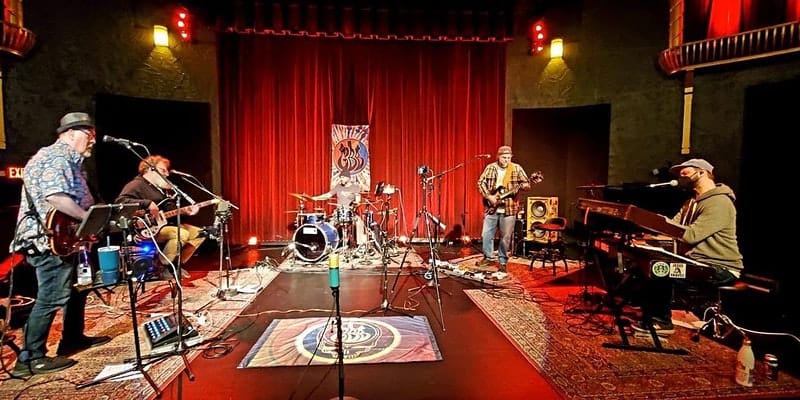
Peter Bach, guitarist and vocalist for Garcia Birthday Band
It was 1978. I was 12 years old and I found my grandfather's arch top acoustic guitar from the ’40s in our attic. It had two strings on it. I busted it out of the old case and started one fingering along with my mom's Neil Diamond records. I'm like, "All right, this is cool. I want to do this." I took some lessons and could play along to some records. My older brother heard me and said, "You think that music's cool. Try this." He gave me a bootleg of the Dead in Chicago on May 13, 1977. This music had some simplicity to it but was also complicated enough — and there was so much of it — that the world opened up in front of me. Two years later, I saw my first Dead concert: June 12, 1980 at Memorial Coliseum. Mt. St. Helens erupts during "Fire on the Mountain." We walked out of there going, "Okay, this is not a regular rock and roll band. These guys are tapped into something in the human experience.
When I started, it was an adventure to drive to California and blow out your tire and get stranded on your way to the show. Now, there are more Deadheads than there were in 1995. You can get the t-shirt at Target. My kids are 20 and 22 and, in the last few years, they've been bit by the bug. I was able to take my daughter to see Bob Weir, Phil Lesh, and Dead and Company. It was really neat to be able to share something with them that I thought in 1995 I'd never get to do and share that experience.
It's the quality of the songs that I think gets overlooked or ignored. It's all about, "Oh, it's the scene. It's the jam. It's the spinning. It's the senselessness." But the songs speak to the human condition in a timeless way, and I think that's a huge, huge part of it. So much of music today is super packaged. [The Dead] is not. That's why you've got bands like String Cheese Incident and Widespread Panic and Phish and Goose selling out Madison Square Garden. There's a hunger for the unknown and adventure in music. These guys are going to take us on a journey. We don't know where it's going to end up, but we're along for the ride.
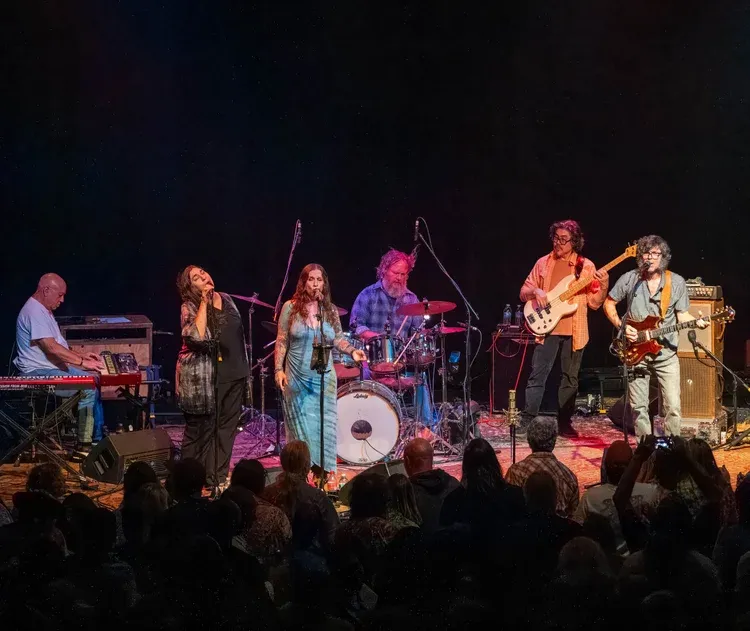
Rodney Newman, drummer and vocalist for Jerry's Middle Finger
We, the JMF family, do not just perform the music that Jerry Garcia wrote and selected to play, we are all huge fans. What makes the Jerry Garcia/Grateful Dead experience so attractive is primarily the unique style of music that embraces a sense of freedom, self expression, and exploration like no other. That music has the capacity to deliver a transformative experience to those who take it in. It inspires a powerful, energetic, and often emotional journey.
Additionally, a crucial ingredient to the magic is the vibrant community that surrounds this special music. Most of the members of Jerry’s Middle Finger became enraptured by the “scene” when Jerry was still around and did all we could to indulge in the music and lifestyle. To now be gifted the ability to perform for that same loving audience is a gift that cannot be measured.
There is no other genre of music that cultivates the energy and dedicated following than that of Jerry and the Grateful Dead. It has always been an insatiable community that doesn’t just want, but requires, the concert ritual to feed their soul. A experience that is always shared with and made whole by the family of like-minded fans that gather night after night.
There is little surprise that Jerry's legacy has carried on for so long and there is no doubt it will continue to flourish and grow. The universe his music cultivated is, especially in challenging and uncertain times, a Mecca for acceptance, love, and one of the most beautiful shared experiences on the planet.
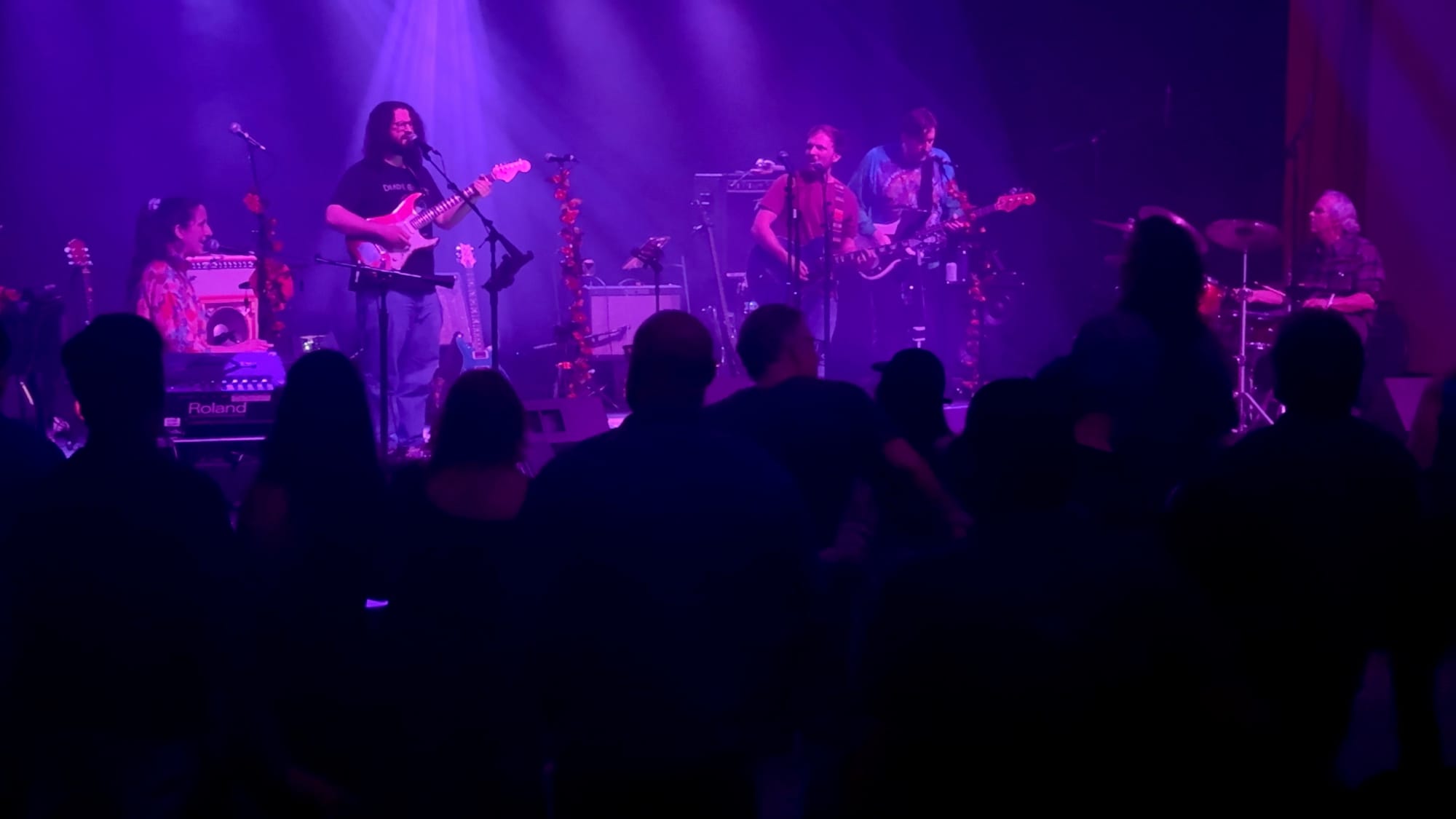
Daniel Stumpf, guitarist/vocalist for Caught Dead Handed
My dad was kind of a Deadhead. Not a super fan, but he'd been to eight shows, I think. It was definitely music I grew up listening to, especially Workingman's Dead and American Beauty. One of my first memories was when the family dog died when I was like 8 or 9. My dad was singing "Uncle John's Band" to me, and I thought he was making it up like a lullaby. I remember it bringing up emotions in me that I needed to process.
Then when I was in high school, I was really into Neil Young, but when I was 15, I heard the ’74 Winterland version of "Sugaree" on YouTube and that blew my mind, especially Jerry's guitar playing. I'd been casually playing guitar since I was 12, but when I heard that recording, I got way obsessed with playing guitar and wanting to sound like Jerry. I had never heard a guitar solo quite like that. A really good Jerry solo has a verbal cadence to it, like "Morning Dew" or "Sugaree" or "Brokedown Palace." It sounds to me like the cadence of someone lamenting or crying out. That was around the time the Long Strange Trip documentary came out. I saw that in the theater with my dad. Those two things got me seriously playing guitar more. Ever since then, guitar and Grateful Dead have always been linked.
Grateful Dead music is always about life and death, lyrically especially. Like, "Days Between" is the perfect song because every Dead song is, in some way, about life, death, and what's going on in between. That paired with Jerry's guitar playing that I consider so human. He actually makes melodies sound to me like the way someone would speak. I think people are drawn to that more sensitive, fundamental, human part of themselves, especially if that have someone in their life that plays the Dead a lot. Once you listen to enough hours of it, you start to really like it.
There's also a kind of hobby aspect to it. There's so many recordings that are all accessible for free. So if someone likes a song, they can find an even better version that they like more. One thing for me, and I bet other people feel this way, too, is that some of these recordings are so well done that you can hear every instrument so clearly. I found it so amusing to be listening to the Dead and just listen to one instrument. I'd be listening for Phil for maybe a minute and then Keith [Godchaux] would do something that played off of it, and then someone else. I could just bounce back and forth and then I could zoom out and hear everything.
A lot of the younger bands that are popular right now got their start playing on Shakedown Street of Dead and Company shows. There's a documentary Summer Tour about young people following Dead and Company on tour in 2023, which I did. I did about 16 shows on that tour. It follows Jerry Pierce, who has this band called Mason's Children. They played on Shakedown Street after every show, and they're super popular now. Grateful Shred was doing the same thing, playing outside of Dead and Company shows. Now that that's over, we're all asking ourselves: "What's next?"
Artwork for this edition of the newsletter is by Pedro Figari and is part of the FEMSA Collection of Latin American Art. It is currently on display at Museo de Arte Contemporáneo de Monterrey in Monterrey, Mexico through August 30.