Remembering Elliott Smith With Author Jamie Fisher

Hello at long last, my lovely subscribers.
It's been a minute. I had planned on taking the week before last off so I could venture north with my sister and spend a whirlwind weekend in Victoria BC. But the week after, my plan to write about a local artist fell apart due to a communication breakdown. Hope you didn't worry about me.
For this edition of Is This Real, I had a nice sit down with author Jamie Fisher about her new biography of the singer-songwriter Elliott Smith. I hope you enjoy reading it.
If you like my words, you might want to grab the new issue of UNCUT where you'll find my feature on Margo Cilker, an Americana artist from here in the Northwest who made a new album (out this October) full of songs that she says scared her.
Beyond that, all is the same. Working at the shop, digging for treasure, mapping out future installments of this newsletter (including a story about the above-mentioned artist who eventually got back to me). Thanks again for your continued support.
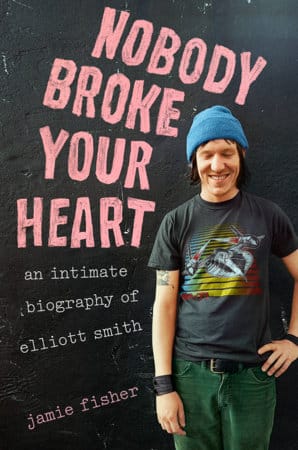
Jamie Fisher doesn’t care much for algorithm-based music recommendations. Rather than let a playlist or streaming service determine what new sounds she should explore, the 34-year-old writer opts for suggestions from friends or trusted sources like the majestic NPR Music.
It was through the latter that Fisher first heard the songs of Elliott Smith via a tribute album to the late singer-songwriter recorded in 2015 by Jessica Lea Mayfield and the Avett Brothers’ Seth Avett.
“I was like, ‘What is this?’” Fisher recalls. “And then I really started listening. I had just gone through a breakup at the time, so I’m listening to ‘Twilight’ like…” She breaks into an affected look of emotional pain and a quick wail of despair. “’I’m being gutted and I want more!’”
Fisher eventually circled back to the source: the five studio albums Smith made during his lifetime and the few posthumous releases that have been released since 2004. Still, she says she didn’t become a true fan until the pandemic, when she had a lot more time to walk around her then-hometown of New York City and listen to the late artist’s oeuvre.
“It was good company because he really rewards repeat listening,” she says, as we settle into an outside table at Prince Street Coffee in Northwest Portland. “There’s always more to discover about the structure or little musical quotations in the songs or lyrics. That’s when I started thinking, ‘Oh, I should look at biographies.’”
What Fisher found was wanting. The majority of the books written about Smith tended to miss the mark completely, either because they came too soon after the artist’s death when his friends and loved ones were still reeling or because the author was clearly out over their skis. Fisher points to one biography that shall remain nameless that claimed with a straight face that “Needle in the Hay” was somehow connected to the Texan wrestler Haystacks Calhoun and “Between the Bars” was about Smith rescuing a girlfriend from prison.
“Just from listening to the music and the way he talked on stage, [those books were] not capturing this part of him,” Fisher says. “There must be more out there. Especially once I dove in and realized there wasn’t any kind of central archive that people could be drawing from. So it was like, ‘Okay, this is based on talking with six people and reading some newspaper articles. There’s a lot more we can do.’”
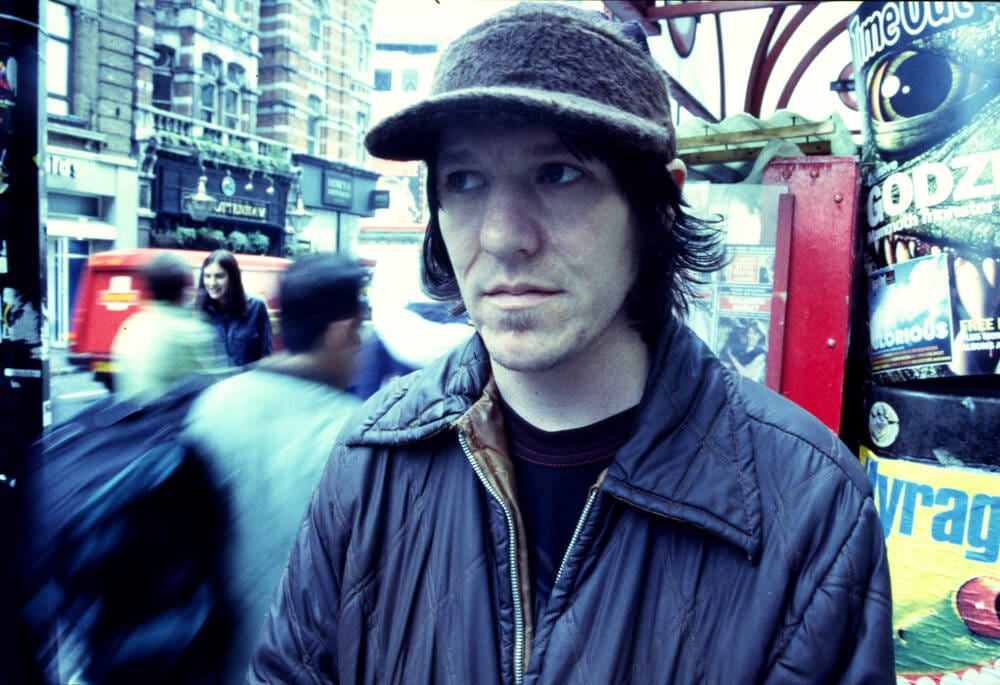
Fisher did all that and more with Nobody Broke Your Heart: An Intimate Biography of Elliott Smith, her recently published account of Smith’s life and career. The deeply researched and affectionately written book is built from dozens of interviews the author did with folks from every stage of the late musician’s life. The adjective in the title is the key. There’s plenty of details within the pages of this biography that unpack Smith’s songwriting practice (he seemed to always have an instrument within arm’s reach or a notepad on hand in which he honed his lyrics), his skills as an instrumentalist (he apparently could knock out a tricky Rachmaninoff piece on the piano from memory), and his focus in the studio. What resonates loudest, though, is the profound, lasting mark he left on everyone that got close to him, and the joy that rippled through him with the same force as the sadness. Fisher doesn’t shy away from laying out the darker aspects of Smith’s life: the abuse he endured as a child, his struggles with addiction and depression. But there are just as many tales of him donning a brightly colored wig, doing an outsized impression of a French hairdresser to the delight of his sister, and thoughtfully discussing everything from Heidegger to Xena: Warrior Princess.
“Elliot loved the word ‘kaleidoscopic,’” Fisher says. “I accepted, after a certain point, that there are all these different little aspects of his personality like mosaic tiles. It’s untrue to just present one tile and be like, ‘Here you go.’ I think that’s really the issue with the historical media representation of him where it’s like this unipolar idea of him. He could be hysterically funny, and he could also be hysterically sad. Sometimes minutes apart.”
What kept ringing like a bell throughout my reading of Nobody Broke Your Heart was how difficult it was for Smith’s friends and family members to see him suffer and how they couldn’t find the right words or ways to properly help. During darker moments in Smith’s life, especially during his time here in Portland, he would talk of taking his own life, even spelling out the method he would choose to do it. (If you didn’t already know, Smith died by apparent suicide in 2003 at the age of 34.) His relationships with women were tempestuous and marked by frequent break-ups and reconciliations. Smith would also drink heavily and, sometime in the late ’90s or early ’00s, started using heroin. The closest anyone seemed to get to offering him a proper lifeline was in 1996 when several of his friends and family members staged an intervention. It may have landed the artist briefly in a rehab facility, but the only true outcome was a sense of distrust and the fracture of his relationships with his then-manager Margaret Mittleman and Slim Moon, former head of Kill Rock Stars, the label that released Smith’s first three solo albums.
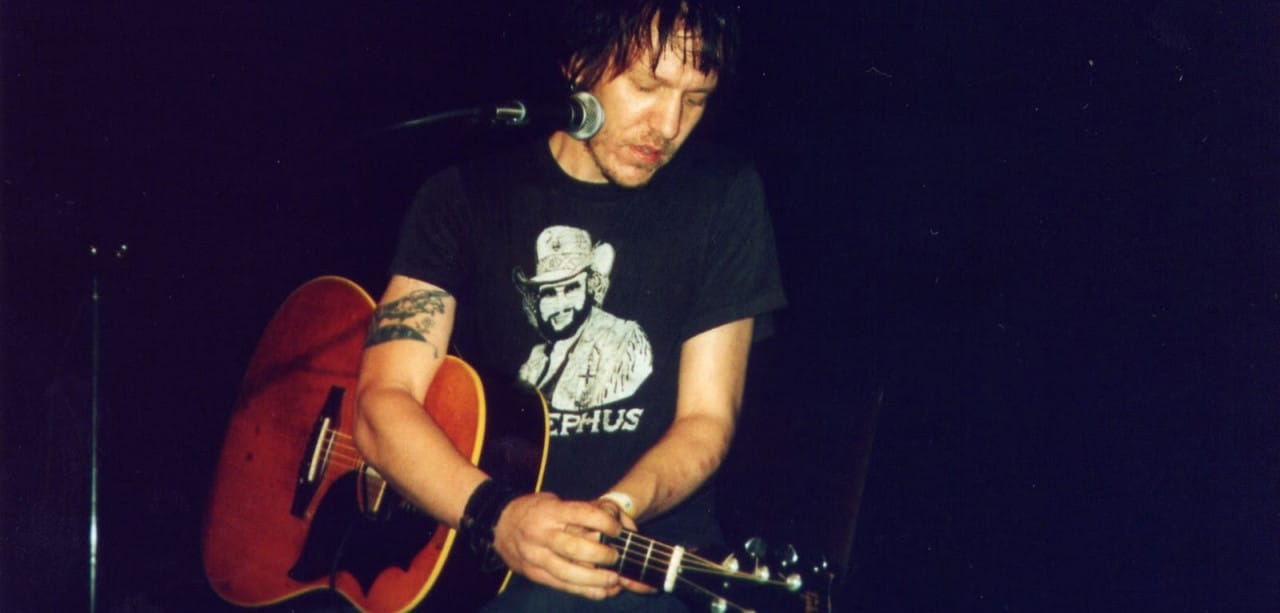
Smith, the author says, “was seeking help but seemed resistant to it, which made it hard for anyone to know what to do.” Neil Gust, Elliott’s longtime friend and a former member of Heatmiser, the wiry rock group the two men started in the early ’90s, summed up these conflicts to Fisher perfectly: “He remembered this conversation with Elliott [following the intervention],” Fisher recalls. “Neil was like, ‘What did you want us to do? What were we supposed to do?’ I was like, ‘Well, what did he say?’ And he goes, ‘I don’t think he really had an answer.’ It’s like wanting help and then not wanting the form that help comes in.”
Another aspect of Fisher’s book that struck me dumb was the fact that there is apparently still speculation regarding Smith’s death. Entire websites have been published poring over the details of that tragic day and folks still picking out flaws in the Los Angeles Police Department’s investigation. (Fisher made it a point to remind me that the case is still technically open as there is no hard evidence to 100% prove the cause of Smith’s death.) That’s not to say that Nobody Broke Your Heart adds fuel to any conspiratorial flames or muddies the waters of this subject at all. Fisher, whose day job is as a researcher for The New York Times Magazine, lays out the facts as she has them, from both the LAPD’s report and her interviews with Jennifer Chiba, the art therapist and Smith’s partner at the time who was in the apartment when Smith died.
“There’s this song ‘Confidence Artist,’” Fisher says, referring to a track Smith wrote around the time of his 2000 album Figure 8. “It goes, ‘If you’re seeing something here you’re not supposed to see / you’ll be charged a penalty and you will pay forever.’ I felt like I’ve seen too much and then trying to convey what I had seen without saying too much was really hard. Originally there was an extra 30,000 words at the end of the book going into some of the examination around his death. And even if you’re not writing about it sensationally, it becomes too much.”
The other, more positive reaction I had to Fisher’s book, and likely the one she wants all of her readers to have, was wanting to spend more time with Smith’s music. In the weeks since finishing it, I’ve returned to lifelong favorites like Heatmiser’s masterful 1994 album Cop and Speeder and Smith's 1995 self-titled LP. It also made me lament my faulty memory.
I had the pleasure of seeing Smith live only once when he played a solo set in November of 1997 in the smaller upstairs bar at La Luna in Portland. What I can recall about that night are stray details: everyone sitting on the floor, the joy in my pal Jeff’s face as he sang along with “St. Ides Heaven,” my own thrill at hearing “Rose Parade,” embarrassing myself in front of Gus Van Sant who was in attendance that night. Nothing else about Smith or his demeanor or stage banter is accessible to me.
Recounting this to Fisher as we finished up our chais and prepared to part ways, she reflects that my experience is not dissimilar to what it was like for all of the folks she spoke to her for Nobody Broke Your Heart.
“It’s less a book about what happened than it is a book about what people remember at this point,” she says. “Everyone remembers different parts. ‘I remember how he made me feel.’ ‘I remember exactly the songs we were listening to.’ ‘I remember what he was wearing.’ It’s a book about memory.”
Nobody Broke Your Heart: An Intimate Biography of Elliott Smith is available at fine independent booksellers right now. Fisher is also organizing a series of benefit concerts celebrating Smith's music, including an event at PAM CUT's Tomorrow Theater on December 16 with musicians Anna Tivel, Gabriel Kahane, and Shannon Lay. All proceeds go to the SIMS Foundation and Outside In. Click here for more information.
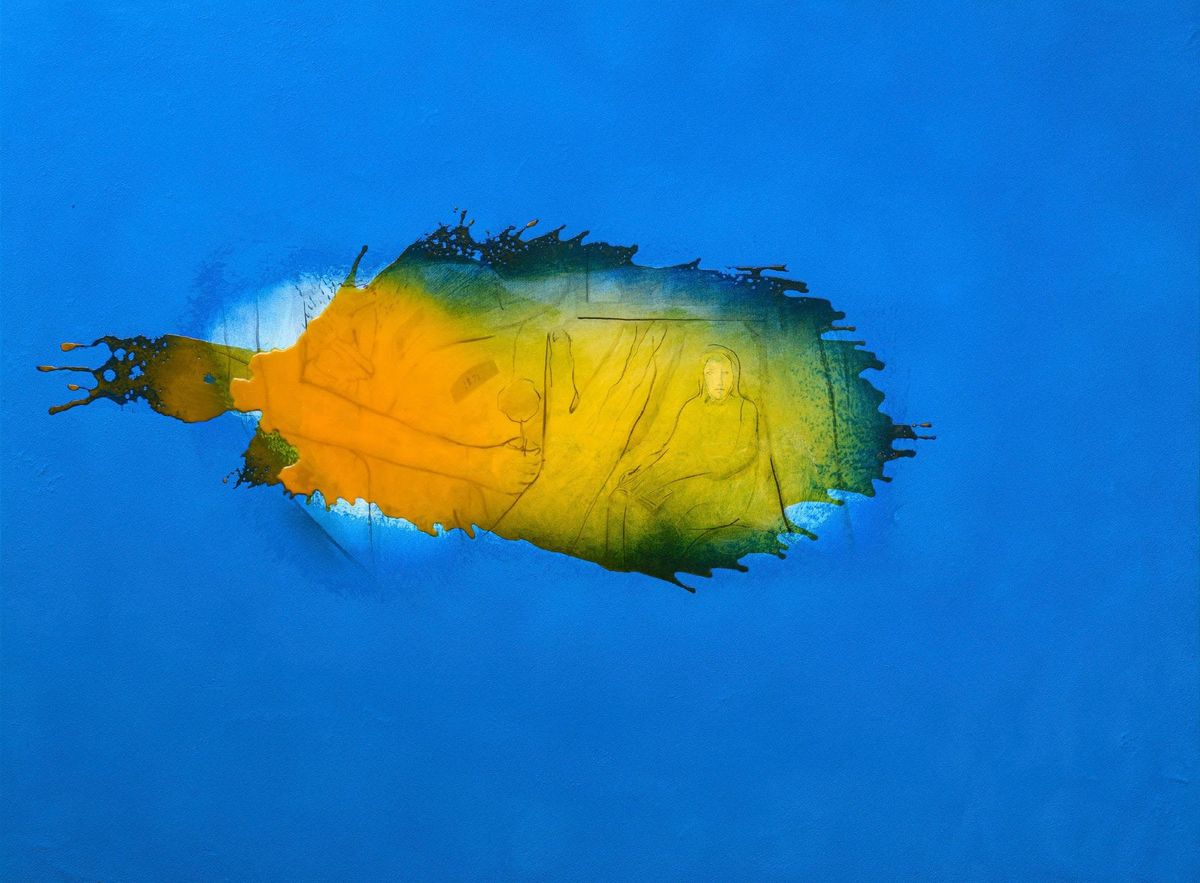
Artwork for this week's Is This Real is by Karen Ohanyan whose work is on display at National Gallery of Armenia through September 5.