Mike Gamble's Weekly Practice

Hello, friends. Welcome to another edition of Is This Real, my weekly glimpse into the Portland music scene. I put together a new story for you about the talented and indefatigable Mike Gamble and his series of weekly Bandcamp releases that he's been dropping since the start of 2026.
Before we get into that, I would like to thank Ned Lannamann, one of my favorite music writers, for the shout out in the recent edition of his newsletter The Vinyl Cut. As you may or may not know, I was, until May of this year, a regular contributor to that publication before moving on to start this little venture. It's always a great read, with Ned bringing his vast knowledge of popular music and his keen ears to his reviews of vinyl reissues. If you're not already a subscriber, I would highly recommend signing up.
 Ned Lannamann
You should also subscribe to this little publication if you're not signed up already. It's weekly, it's free, and it's a damn good read if I do say so myself.
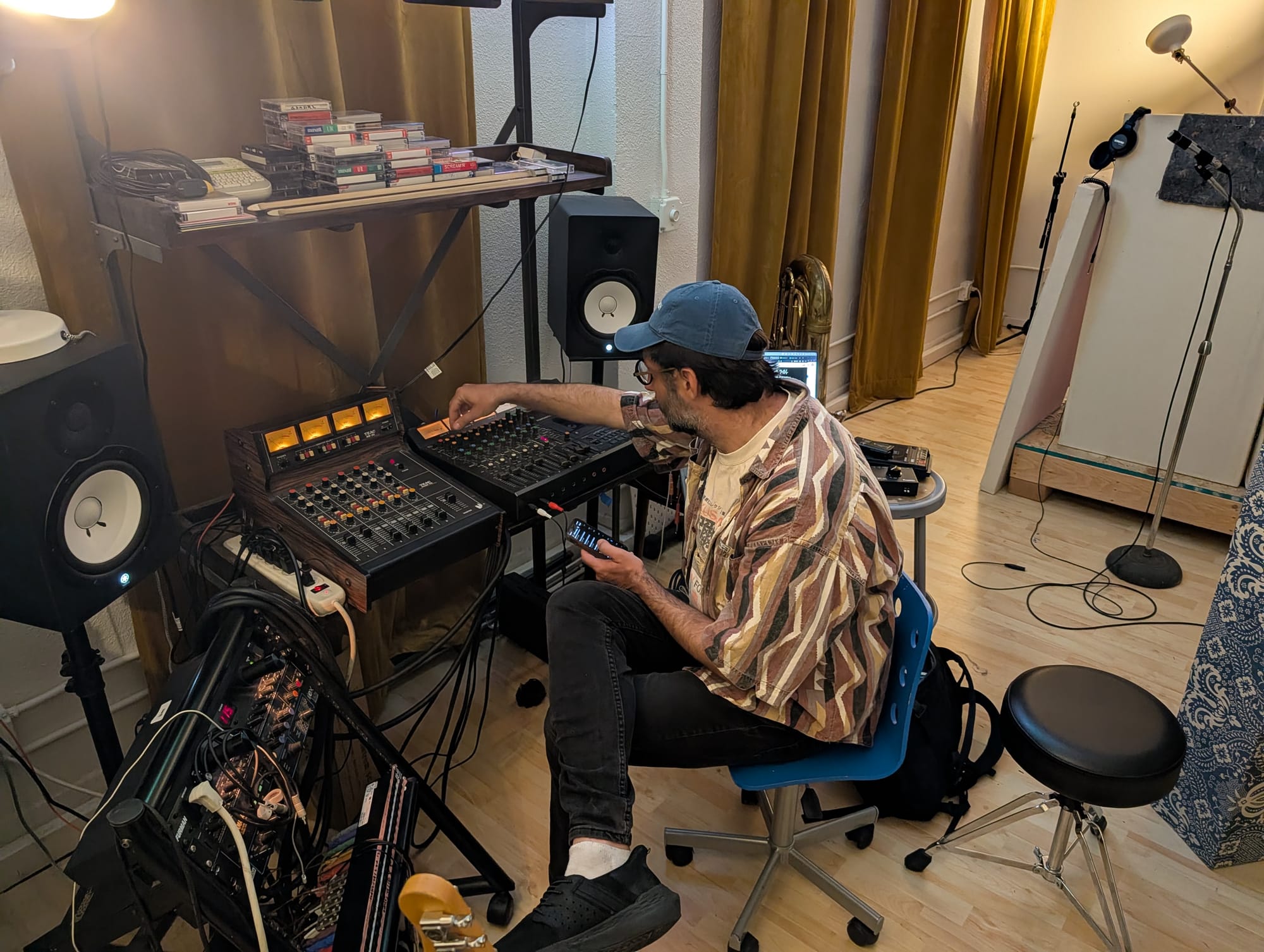
Every Thursday morning, musician Mike Gamble makes the 10-minute walk to the Center For Light, Sound and Color (or Color Therapy Recording as it’s known colloquially), a nicely-appointed recording studio on the second floor of a bustling building on NE Alberta. Upon arrival, the 46-year-old will indulge in his only vice—French press coffee—and, as is the practice at this space, pop a VHS tape into the VCR/TV combo in the main control room.
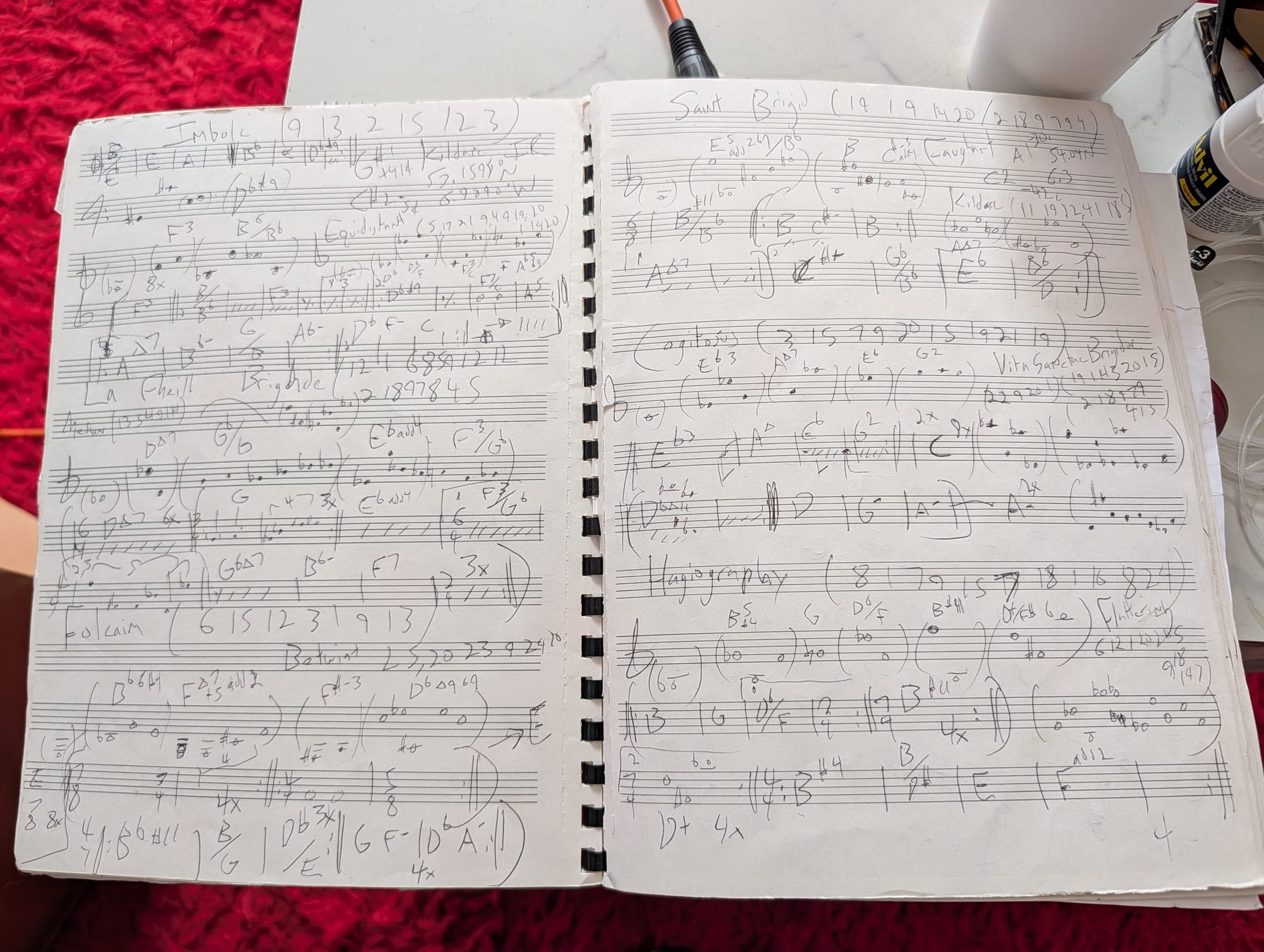
Eventually, he will settle into his workspace: a crowded corner of the studio near the kitchenette where he has arranged a small six-channel mixer, his laptop, and, crucially, his TASCAM 246 Portastudio. Into the latter machine, he will slip a blank cassette and slowly set about filling one side with fresh music. Often, he'll be working from a notebook filled with new compositions that he cooked up in his rare free time, but sometimes he will flex his improvisational muscles and see where he lands. The pieces range from splayed-out free jazz to jagged breakbeat exercises to short, jabbing melodies played on an upright piano. The only stipulation is that he plays every instrument and uses just the four tracks available to him on the recorder.
“Once in a while I'll do a run of outboard effects on the fourth track,” Gamble says, sitting in the studio’s main control room while a video of old wrestling footage plays silently nearby. “But otherwise I'm not doing the thing where I record three things and bounce it to the fourth and then do all these overdubs. That's not where I'm at right now.”
When he's satisfied with the final product, Gamble will feed the music to his laptop. From there, it's a process of editing, mixing, and mastering (all of which he'll do at home) and then uploading the tracks to his Bandcamp page.
All of the above is not an unusual practice for many modern musicians, but what makes Gamble’s efforts worth writing about is that he's been keeping up this routine since the start of 2026, recording and issuing a new batch of tunes every week. And the plan is to keep doing so until he has 52 releases on Bandcamp.
“It’s like a 12-hour or 14-hour situation every week,” Gamble says, “not including the writing. I don't ever want to stop doing it this way, but I have the exact amount of tapes to finish the whole 52-week thing.”
A seasoned improviser primarily in the modern jazz idiom, Gamble is no stranger to setting up conceptual frameworks to play within. Last fall, he released a series called Snippets, collections of minute-long pieces that he would cook up and record as quickly as possible (generally while stoned out of his gourd). The practice of getting those albums together helped spur Gamble forward to this new year-long project as did the influence of the late Detroit hip-hop producer J Dilla and German composer J.S. Bach’s Chorales, a series of 400-plus short works the composer wrote based on Lutheran hymns.
“I was reading [Dan Charnas’s biography] Dilla Time and getting into the mindset of like, ‘Okay, use your tools. Use your history,’” Gamble says. “And I got inspired by Bach and thinking about him going to the church all the time where his job was to write these Chorales, and I’m like, ‘Okay, let’s get into these Bach vibes.’”
As for him picking the humble cassette tape as his medium of choice, the decision was a little bit nostalgic, and a lot practical. Gamble had been using recording software Ableton Live for some time, but started to worry about what might happen with it when he watched Ryan Oxford, the owner of Color Therapy, lose access to a number of plugins he regularly used after Gamble tried to connect his laptop to the studio's Apollo audio interface.
“It was a bit of a scare moment,” Gamble says, “Ever since that happened, I thought, ‘I’m just gonna utilize this four-track that I got and start recording tapes.’ I know some people will argue that it’s not cool and sounds a certain way. I’m just trying to throw all that away and get into the flow of recording stuff.”
The music he’s released so far this year has been varied and compelling. Gamble goes into the creation of each one hoping to express his feelings about something weighing on his mind, be it astrology, the rise of AI, or memories of folks from his past. (Each Bandcamp entry in the series includes a short essay delineating the themes for that particular release.) The music follows suit with moods that can be playful, deeply emotional, or outright chaotic. Skullduggery, Gamble’s release from April, has a low-key vibe that recalls the more sedate moments in the Naked City catalog, while Truth Idling from February 17 finds Gamble landing in a kind of dub-jazz zone anchored by his Fender Rhodes explorations and busy bass playing.
The other feeling I get from this recent run of releases is of someone wanting to make sure they’ve left their mark on this planet while they’re still here. In June of 2021, Gamble was heading back to his apartment when he fell backwards on the stairs, crashing into a grill and the concrete below. The accident left him with three fractures in his lower vertebrae and a traumatic brain injury. Under the watchful eye of his wife, filmmaker Devin Febbroriello, he spent weeks in recovery, barely able to communicate and dealing with significant amnesia. And for the next few months, Gamble went through numerous sessions of cognitive, occupational, and physical therapy to get as close to normal as possible. All of that came just a few years after dealing with a non-cancerous growth that nearly robbed him of the hearing in his left ear.
“It was tough,” Gamble says with typical understatement of his recovery from the fall. “It was like, ‘I can kind of hear my brain coming back.’ It took me a long time to remember how to play guitar and looking at computers was really hard. It took around two years to get comfortable with that.”
Whatever his motivation, Gamble is maintaining a torrid pace in his creative pursuits and his work life, which makes this year-long project feel especially impressive. He holds two teaching positions: teaching guitar at both Reed College and Oregon State University, while also overseeing an online class called Contemporary Music Industry for the latter. For the past decade, Gamble has also served as artistic director for Creative Music Guild, the non-profit organization that has been presenting all manner of amazing live performance events throughout Portland since 1991. On top of that, he maintains a steady schedule of gigs both here at home and around the world. A few days after our sit down, he is set to fly down to Sante Fe for a run of shows with bassist Jeremy Bleich.
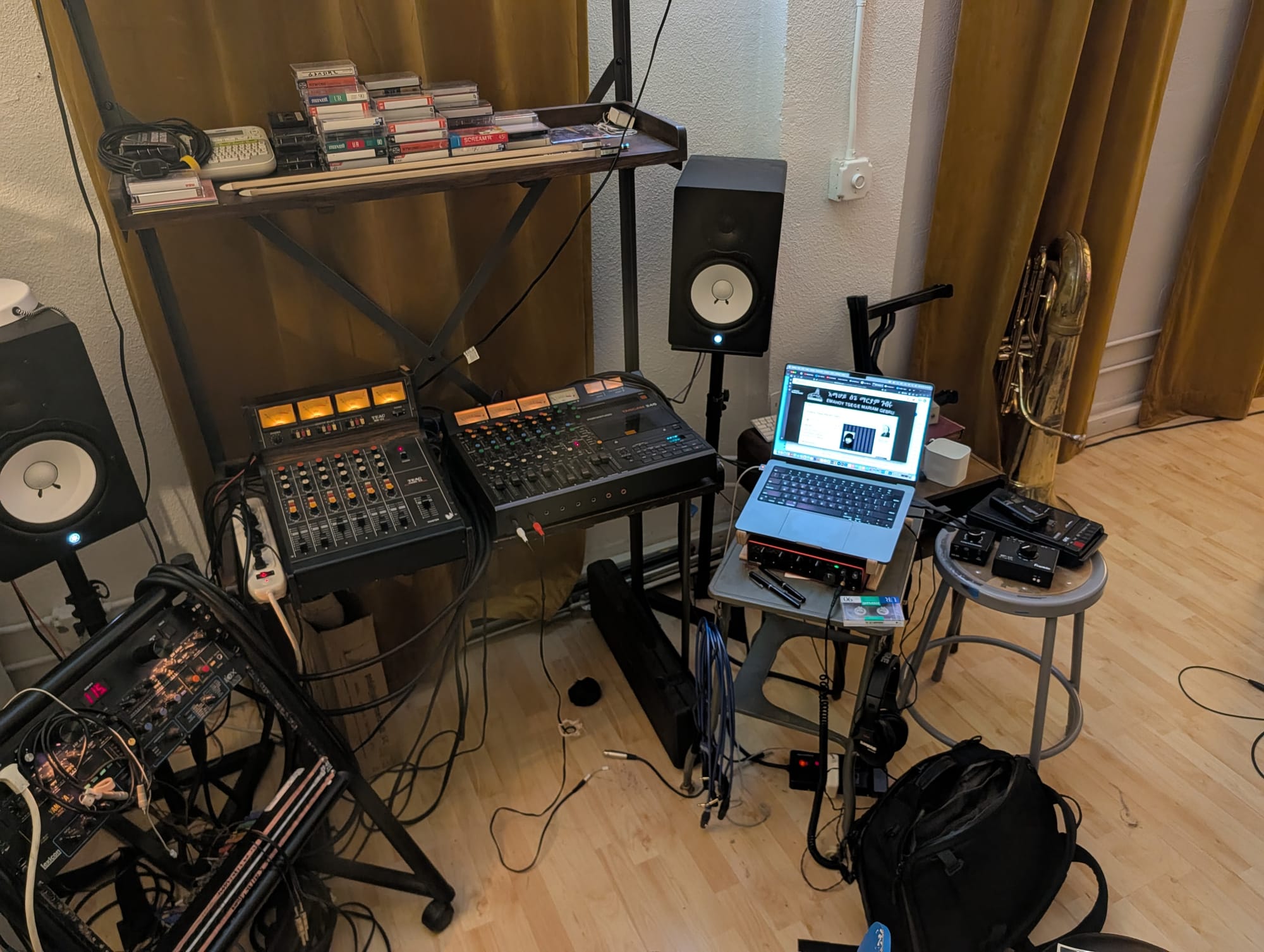
With the summer here, his schedule has calmed down considerably, but he’s still filling his free time up with various projects. When I visited him at Color Therapy on a recent Saturday, Gamble began the day transferring some iPhone recordings he made of a recent gig with drummer Machado Mijiga and is waiting for the arrival of trumpeter Noah Simpson for a session. He’s also eyeballing the tuba perched up against the wall by his workstation as a potential addition to a future weekly release.
“I really am humbled more and more that I have this access to the studio,” Gamble says. “I'm not a religious person, but this is like a true blessing to have this. I have to take advantage of it. It’s my art and my practice.”
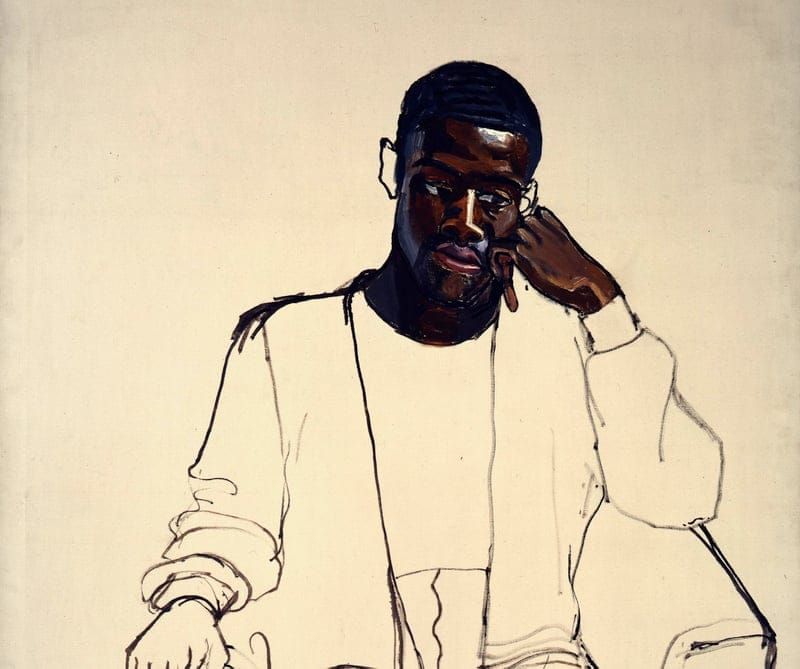
Artwork for this week's edition is by Alice Neel whose exhibition Beautifully Imperfect is on display at Serralves Museum of Contemporary Art in Porto, Portugal