The Blind Trust of Lisa Molinaro


Greetings once again. Back with another edition of Is This Real for y'all. I was thrilled to get some with Lisa Molinaro, one of my favorite local musicians, to talk about her first-ever solo album and so much more. I hope you enjoy reading it. If you do, please share this with a friend and encourage them to subscribe. You should subscribe to if you haven't already. Cool? Cool

In our attention-starved present, most artists are facing an uphill battle to get their work seen or heard. The climb only gets steeper when, like Lisa Molinaro, you're a woman in her early 50s putting out your first album of original music.
Molinaro has some name recognition, at least. For the better part of a decade, she was one-half of Talkdemonic, adding viola and atmospherics to the group’s rhythm-forward indie/electronic sound. And for another decade, Molinaro was a member of Modest Mouse, performing countless gigs with the group and contributing to two of their studio albums: 2015’s Strangers to Ourselves and 2021’s The Golden Casket.
But in both cases, Molinaro was generally serving a support role, bolstering the vision of her bandmates and staying out of the way when decisions had to be made about the finer details of the recording process. Now, with tomorrow’s release of Blind Trust, a fantastic genre-jumping full-length, everything is on her shoulders—a development that she finds both electrifying and overwhelming.
*’A lot of people put our records, Lisa. You're nothing really special,’” she says, expressing her inner monologue as we sit down for a late morning brew at PDX Coffee Club. “To me, it's special. Especially coming later in life and having been a part of everyone else's thing, as a band member and, as seen from the outside world, an equal shares kind of person. I never was, really. This feels very rewarding.”
Without knowing Molinaro’s back story, it would be difficult to tie Blind Trust to any project she's worked on before. There's some slight connective tissue to Talkdemonic in the lush synth drones that color “Over the Moon” and the fizzing rhythms of “The Ending Never Stops.” Otherwise, the album’s roots run far deeper and wider with the influences of Kate Bush’s late ’80s work and, as heard through the blistering “Peach Fuzz,” the ache and torment of ’90s underground rock.
There's also the plain fact that, for the first time, Molinaro is centering her vocals in this material. It's an instrument that she used sparingly over the years, heard occasionally on Modest Mouse recordings and prominently during the months she served as an auxiliary member of the Decemberists when the band was touring for 2006’s The Crane Wife. On Blind Trust, Molinaro's husky, controlled voice is allowed to shine forth. It's enthralling enough in the comfortable, almost conversational tone that makes up much of the album, but when she takes it to a higher register on “Charred Angle” or in some of her multi-tracked harmonies, the effect is devastating.
Where Molinaro ended up with Blind Trust is the culmination of not only her journey through the Portland indie rock scene and the minefields of the major label world, but her personal quest to find the creative strength to make a full album happen. After leaving Modest Mouse, she spent some months capturing melodic ideas and song fragments in a small home studio she set up in her apartment.
“I was really undisciplined,” she remembers. “I was writing like 30-second snippets of things, and then I would be like, ‘I can't. I'm done.’ It wasn't until I wrote ‘We All Get Stuck,’ that I was like, ‘Okay, I have a body of work here that's cohesive, and I'm going to make something out of it.’”
Keeping Molinaro on task was her successful application for a grant from MusicOregon’s Echo Fund, which gave her two things she desperately needed: the money to mount a recording session and a deadline.
“That was a good fire under my booty,” Molinaro says. “I need a goal or a deadline otherwise it's never gonna happen. It was the structure I needed.”
To help reach the finish line, Molinaro called on some friends and called on some favors. She nabbed a few free days at Ice Cream Party, Modest Mouse’s studio and clubhouse in NW Portland, and for her rhythm section, she grabbed some old friends: bassist Justin Harris (ex-Menomena) and Dustin Dybvig, a multi-instrumentalist who stuck primarily to the drums. At first, Molinaro was very protective of making sure the two men were serving her creative vision, but after a while, she loosened up and let Dybvig add some synths and textures to certain songs without even hearing them first. The musician sent his work directly to recording engineer Zach Bloomstein to play around with before the music hit Molinaro’s ears.
“It was like cutting my teeth, so to speak,” she says. “The process of, ‘How do I do this all on my own?” Then I’m giving it to someone to mix, then I’m learning how to say what I need out of that mix. And then what do I do about mastering? I just didn’t know how to do any of that stuff because I had never done it.”
Around the same time that Molinaro was finding her feet as a solo artist, she was also learning a new skill set: composing the score to a film. A couple of years back, she received a message from someone looking to reach Isaac Brock, the Modest Mouse leader and Molinaro’s ex, as they wanted to hire him to play a role in an independent film shooting in Portland. Though it was some time after the couple had split, Molinaro was still peeved about the request.
“I was like, ‘You’ve got a lot of balls writing to me,’” she says. “I said, ‘I’ll tell you what. I will put you in touch with him if you let me audition for a part.’ And they were like, ‘Well played.’”
Molinaro eventually did land a small role in what would become the goofy comedy Raging Midlife, but along the way the filmmakers, knowing her past as a member to Talkdemonic, suggested that she score the movie. At first, she balked at the idea, but her partner talked her into it, knowing that she could figure it out as she went. As with Blind Trust, she didn’t go it entirely alone, calling on mentors like Dave Sardy, the former Barkmarket leader turned celebrated record producer who also scored the films Zombieland and End of Watch, and Nathan Larson, the Shudder to Think guitarist who has scored dozens of films including Boys Don’t Cry and Margin Call.
“I would just talk to them, and they were very encouraging and helped me find the courage,” Molinaro says. “I was intimidated by comedy. It’s not my genre, but when I watched it, there’s a haunted house scene, and a tense car chase scene, and a love scene and a mock noir scene. So I was like, ‘Oh, you get to do all these different genres.’
“Then the weirdest thing would happen,” she continued. “I would write a part and go, ‘Let’s see how it lines up with the scene’ and weird things would happen where the music would line up perfectly with events in the film. I called Nathan and I was like, ‘Dude, what is going on?’ And he’s like, ‘Yeah, that’s the magic right there. You didn’t even plan it so lean into that.’”
Though Raging Midlife didn’t get much of a theatrical release (you can catch it on Tubi or Hoopla), Molinaro is hoping that it can still become a calling card to help open the doors to other opportunities like it. For now, though, she has the promotion of Blind Trust to think about. At present, there are no grand plans for a tour or any live performances, but her hope is to either hold an intimate listening party or find a way to recreate every piece of music on the album at a one-time-only gig. “I’d like to tap into the youth here in Portland that are really talented,” she says of this dream show. “Maybe have some singers from a high school choir help out or maybe Metropolitan Youth Symphony string players. This is the dream.”
Before we went our separate ways, we got caught up talking about the cover art of Blind Trust. [See the picture of Molinaro that accompanies this piece.] Her curly, dyed blonde hair looks big and almost playful, but the look on her face expresses a lot of different emotions: defiance, hurt, hopefulness. It’s the entire multi-faceted spirit of the album condensed into a perfect still image.
“It was 100 degrees out,” Molinaro says of the photo shoot that cover art came from. “And we had two hours to do it because it was cheap. We had all these outfits from Fine Art Fruit and I borrowed some clothes from Mary [Luczycki, the photographer for the album], and we were doing all these fun photos. But when it came out, I knew all along it was going to be the cover. I had some doubts. It felt a little egotistical to put my face on the cover, but I think I knew it was going to be that one for all those things you mentioned. I don’t know how I sent the feelings through to the camera. It’s really naked and I like how it mixes with what the cover is. ‘I trust you to take this record and listen to it. I put everything into this and here it is.’”
Blind Trust will able to stream everyone starting June 17.
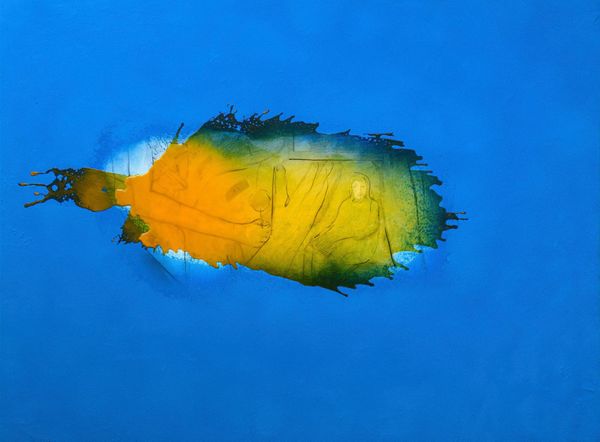
Artwork for this edition of the newsletter is a still image of Fog Promenade Sengokuhara taken by Shu Nakagawa of a " fog sculpture" created by Fujiko Nakaya. The image will be on display at the Pola Museum of Art in Hakone, Japan as part of their current exhibition, The New Vision: Monet and the Contemporary Gaze.