Portland's New Wave of Listening Rooms

Happy Thursday, friends. Thank you, as always, for checking out this little passion project of mine. This week, I take the temperature on a couple of listening rooms that are encouraging people to gather and spend time drinking in the sounds of amazing records played through top-notch sound systems. One has been open for a while and is already making quite a mark on Portland's music community; the other will be open soon.
As ever, please do consider becoming a subscriber if you haven't already. And if you are reading this in your inbox, please share this with folks that you think might like what I'm writing about. It makes all the difference.
One of the prevailing rumors surrounding the long gestation of Second Coming, the 1994 album by the Stone Roses, is that the Manchester band kept stalling the sessions by bringing their favorite LPs with them so they could hear them played through the top-notch soundsystems at Forge Studios in Shropshire and Rockfield Studios in Wales.
It may be utter bullshit said in jest by a member of the quartet or some studio gofer, or entirely made up by some member of the British press. But, as a long time vinyl collector and amateur audiophile, it has the ring of truth to me. With each new piece of gear I stumble into—the Sansui 9090 stereo receiver I found at a thrift shop or the Grado SR-80 headphones my wife gifted me a few years back—my first move is to grab my copy of Dots and Loops or 94diskont or A Love Supreme and give them a spin, looking for fresh details and nuances I may have missed when I heard them through my previous so-so equipment.
When I stepped into Mono Space in downtown Portland, I was looking for similar sonic revelations writ large. The recently opened “listening gallery” is the brainchild of JD Hooge, the former CCO of local ad agency Instrument, who went deep into the rabbit hole of audio equipment during the pandemic and came away wanting to find some way to share his astonishing hi-fi experiences with the local community. It's an enticing concept and, having written about similarly minded spaces in Portland before, one that I was eager to investigate.
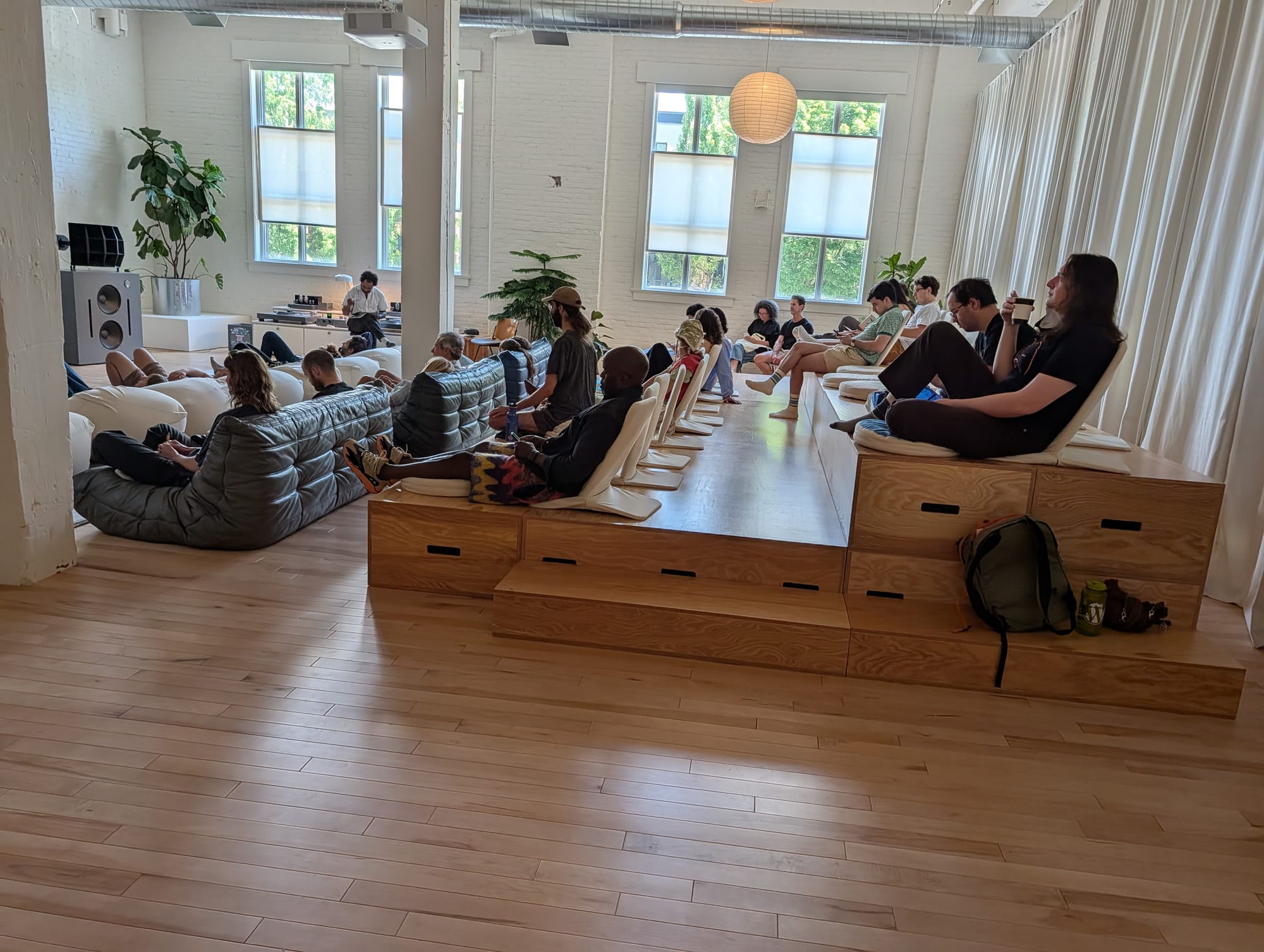
Situated on the floor were rows of bean bag chairs and low couches where folks sipped tea or sat back, eyes closed. Behind that were tiered wooden platforms with ergonomically designed seats and cushions. Those, too, were filled with curious folks, some flipping through one of the many music/art books from the space’s lending library or, in the case of one young man, calmly working on the shading of a comic book panel on his tablet. Everyone faced a pair of speakers, designed and built by audio guru Devon Turnbull, and a Fostex FW800HS sub-woofer, all at least four-feet tall and all connected to a nearby stereo system.
As I settled into one of the open spots on the wooden platforms with a fresh cup of oolong, I remained eager to have my tiny mind blown. Unfortunately, I arrived just as that afternoon’s selector, KMHD DJ Anthony Dean-Harris, was in the middle of playing The Art of Tea, a truly wretched soft rock/pop-jazz album by Michael Franks. The sparks I looked for in my mind’s eye were quickly snuffed out by a treacly ode to “Eggplant” and a Miracle Whip-smooth sax solo from David Sanborn.
What I can’t deny is how impressive it was to see a few dozen people willing to give up a chunk of a beautiful Sunday (and ignore the Norway / England World Cup match happening at the same time) to sit indoors and simply listen to music. And that’s exactly the vision Hooge had in mind when he cashed out at Instrument and decided to open Mono Space.
“I felt so much more emotionally connected to music when I listened to it on a system like [this one],” Hooge says, standing outside Mono Space’s front door while a steady stream of listeners entered and exited. “I got really excited about that and I wanted to share it. I wanted to see if there’s anyone that might be interested.”
Portland has clearly responded. Mono Space has a healthy number of folks who have paid for a membership to the gallery, and their ticketed events regularly sell out. The regularly scheduled programming at the space has been their most enticing offer. Sound artist Patricia Wolf held a listening session and discussion about her soundtrack to the 2025 film HRAFNAMYND, and DJ and licensed psychedelic facilitator Carina Cha has been hosting regular deep listening sessions that include eye masks for attendees. And in the near future, Mono Space will be welcoming in one of my favorite music critics, Marcus J. Moore, to play and present both albums of spiritual jazz and the first three Funkadelic LPs.
“There's a new form of music presentation that really hasn't existed before,” says Matt Fleeger, the former program director at KMHD who is now serving as director of programming at Mono Space. “It's kind of like radio. It's kind of like DJing. But because of the design of the space and the way the speakers are set up and the attention they command, you have much better focused audience attention. So the ability for people to come and experience something and really get a transformative, interesting experience out of it is really good.”
No matter how convincing the argument about what Mono Space can and has done for the music community, I can’t turn off the contrarian, grew-up-a-punk side of my brain that balks at charging consumers between $20 and $35 to come listen to Pink Floyd’s Wish You Were Here, Fleetwood Mac’s Rumours, or Enya’s Shepherd Moons (all programs on the gallery’s upcoming calendar) no matter how great the sound system and how cool the space.
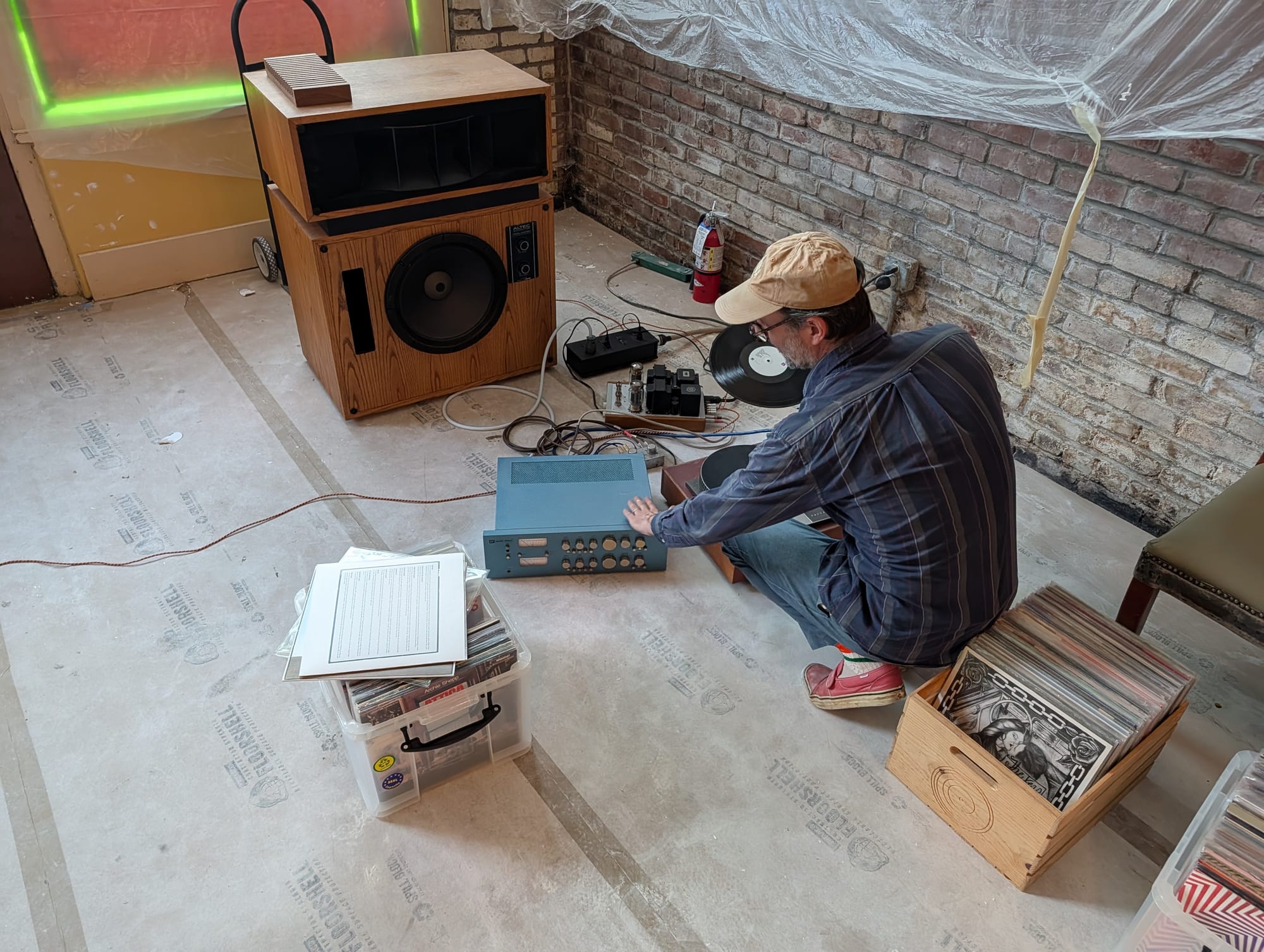
What feels much more my speed and temperament is what Colin Anderson has planned for Far Cry, the bar and listening space he is set to open in August. Much like Hooge, the carpenter and former Shaky Hands drummer got obsessed with audio equipment during the pandemic, at first splurging on newer hi-fi gear before getting into the vintage stuff. Soon, he began plotting out his dream hangout: a well-appointed bar with a killer stereo modeled on the jazz kissa that he visited on a trip to Japan.
“I got a really good idea of how they do it there,” Anderson says as we sip cans of Breakside IPA at the work-in-progress space on North Michigan Avenue. “It was really striking because I’ve been to listening bars here and I feel like a lot gets lost in translation. I feel like spots here are more likely to be a little more slick. In Japan, they’re more like dives. They’re funky. People are smoking like chimneys. But there’s also more of a sense of decorum. There’s a level of respect for the music, which I’m going to expect.”
Much like Decibel Sound & Drink, the cocktail lounge in Milwaukie that features an impressive stereo, Far Cry will make its hay serving craft cocktails and small plates designed by Anderson’s first hire, bar manager Will Stenberg. But every night they are open, the soundtrack will be a thoughtfully curated selection of vinyl played through an impressively warm stereo setup that includes a pair of Altec model 19 speakers, a brand-free amplifier sourced from Japan, and at least one vintage turntable (a Garred 401) fitted with a modern-day tonearm.
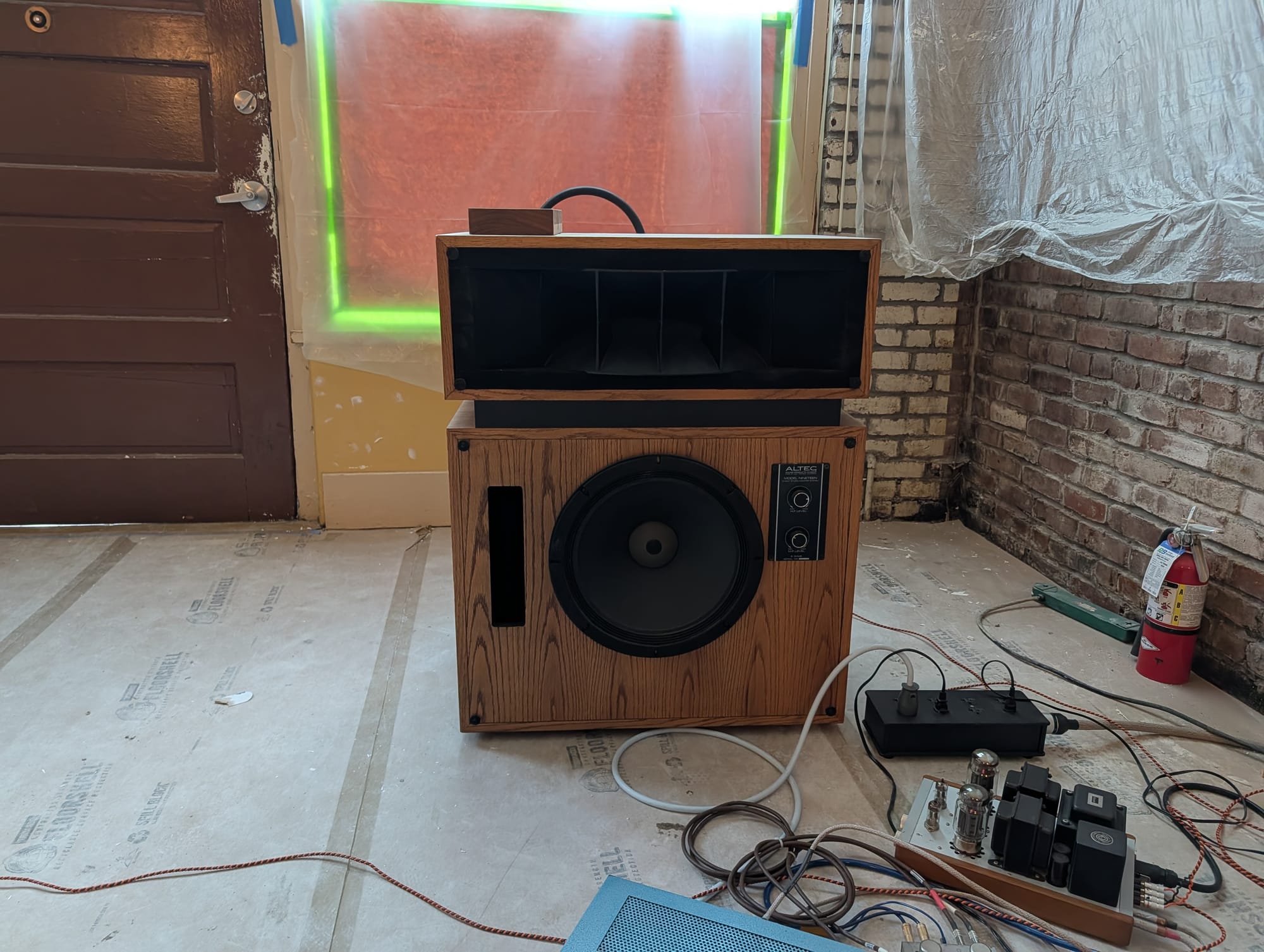
Looking through the two crates of records already at the space and talking with both Anderson and Stenberg, it is clear that the music will be an eclectic mix. Stenberg’s tastes run toward folk and bluegrass, while Anderson dips all over the map. The small sampling of his vinyl collection I flipped through included a healthy amount of jazz, some post-punk and psychedelia, and wonderfully unclassifiable records like Resonance of Time, a recently issued collection of Ethiopian folk songs played by musician and educator Wesenyeleh Mebreku on a Casiotone CT-201 keyboard.
My first selection to hear through Far Cry’s stereo, a recent reissue of Wire’s 1977 debut Pink Flag, was solid; punchy but a little muted, as is the case with most modern vinyl pressings. I really get a sense of what the sound system can do when Anderson slips an album by tenor saxophonist Billy Harper on the turntable. The modal jazz exploded through the room like the gusts from a smoke machine, playing very well with the acoustics of the exposed brick walls.
“The gear is great,” Anderson says, “but the music is always going to be the focus for me. I’m not trying to be willfully obscure, but I would like someone who loves music to come in and, if they’re going to spend all night, hopefully hear something that they’ve never heard before that they love.”
Anderson’s mindset about music discovery at Far Cry feels like the ideal for any of these listening spaces. That’s why it feels so disappointing when, for example, I spent some time at Decibel and one of the first records the bartender played was the Beatles’ Abbey Road. And it’s strange to have listening sessions at Mono Space centered around albums that are well-worn parts of the pop canon.
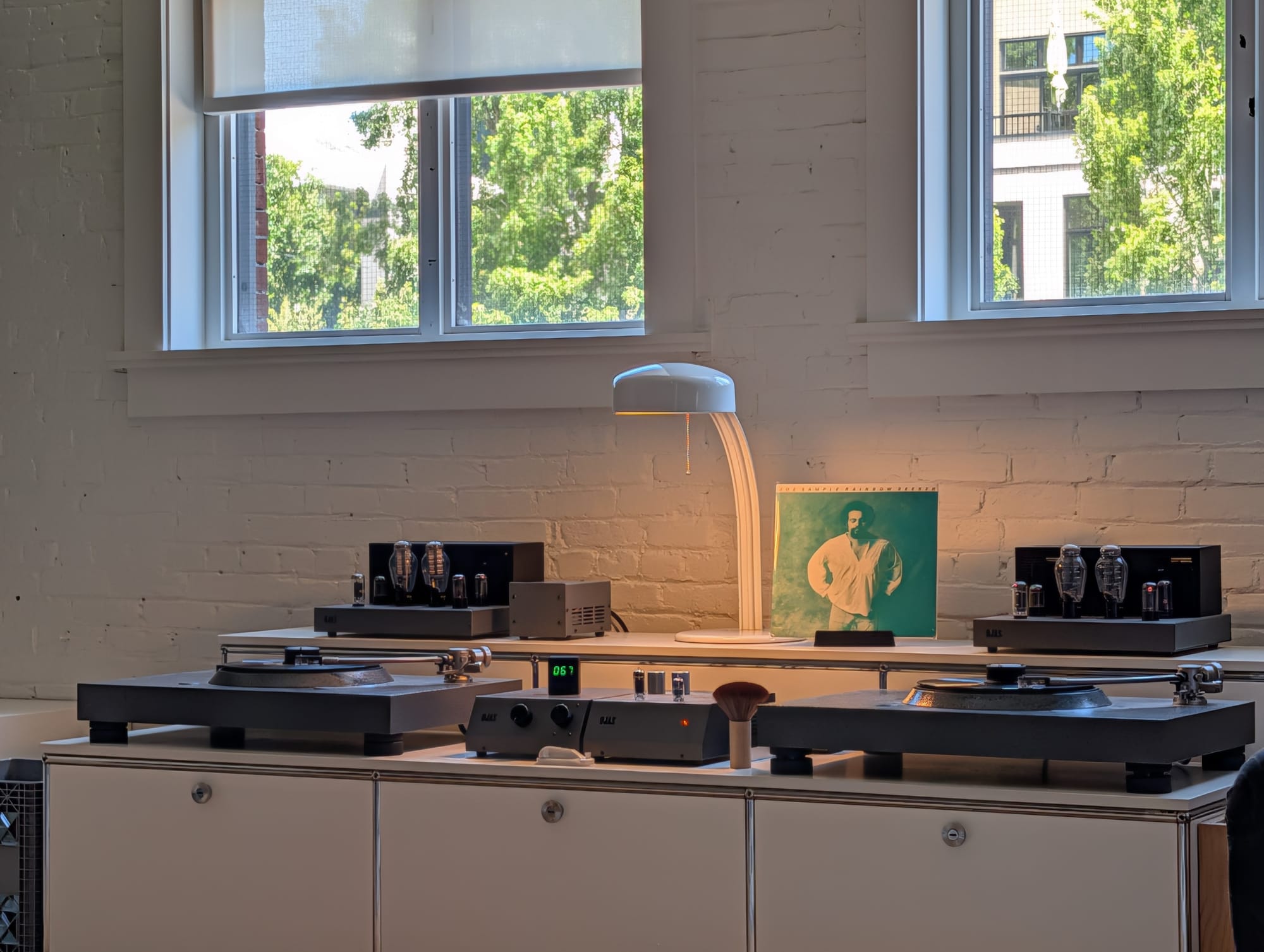
Still, I wanted to remain open to the possibilities of having my mind either changed or blown or both at Mono Space. So, when a couch opened up on the floor of the room that was set dead center between the two speakers, I posted up there. By that point Dean-Harris had dropped the needle on Joe Sample’s 1978 album Rainbow Seeker, another dollar bin staple of smooth jazz. I leaned back and closed my eyes as side A closer “Melodies of Love” kicked in.
As the band took over following Sample’s opening piano solo, I felt the Stix Hooper’s drums start to drift through the stereo field, melting from right speaker to left, carrying me along on its meandering path. It was a pleasant sensation, soothing in the manner of being rocked to sleep. It wasn’t enough to dazzle completely but the experience put me much further along the road to being a believer in Mono Space’s statement of intent.
“Our main goal, as far as we see it, is to get people to focus their attention outside of screens and learn that listening is different than just hearing something right,” Fleeger says. “Just hearing something is passive. It’s hitting you and it’s out. Listening requires you to focus and feel and use your head, brain, and your heart.”
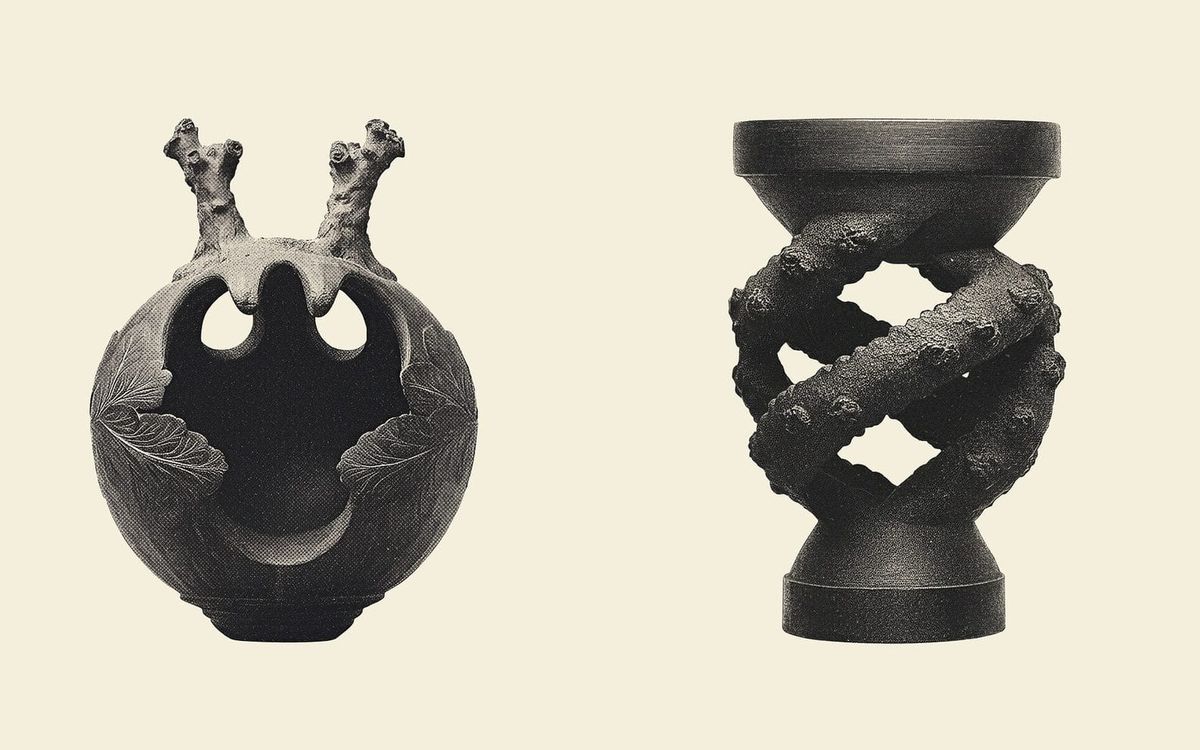
Artwork for this week is by Olalekan Jeyifous, the Nigerian artist whose first solo exhibition Hydricosmic Litanies opens at the Walker Art Center in Minneapolis on August 6.