The Art of Field Recording

Some of the best music being made in Portland today is built from the sounds of the outside world. A handful of deep listeners armed with fancy parabolic microphones, handheld Zoom recorders, or their smartphones set off into natural habitats or unusual corners of the city, ears trained for little sonic jewels that inspire or serve as the foundation for beautiful, often challenging pieces of sound art.
Music To Watch Seeds Grow By, the gorgeous release from Patricia Wolf, for example, was developed from recordings of birdsong, wind, and insect hums that she made during an artist residency at the Rocky Mountain Biological Laboratory. As for Andrew Anderson's Thresholds, he states in the liner notes that, among the various elements that make up his thick sound collages, he used, "leaves and chimes in the wind... feet on an old bridge... storms, and Pacific Ocean."
As someone who tries to stay attuned to the sounds happening around me at any given moment, the art of field recording has always fascinated me. And it seemed like a skill that would take the kind of patience that I'm not sure I have in me right now. But as many of my favorite releases of the year to date are rooted in this practice of listening for and finding little or large snippets of audio that can spark a new piece of music, I decided to reach out to some of the Portland artists that are doing amazing work with natural sounds and give them a few prompts that would hopefully elicit some thoughtful words: What makes a good field recording? What do you listen for? Is there a specific something that you are seeking out or that excites you when you are doing this work? Here are their responses.
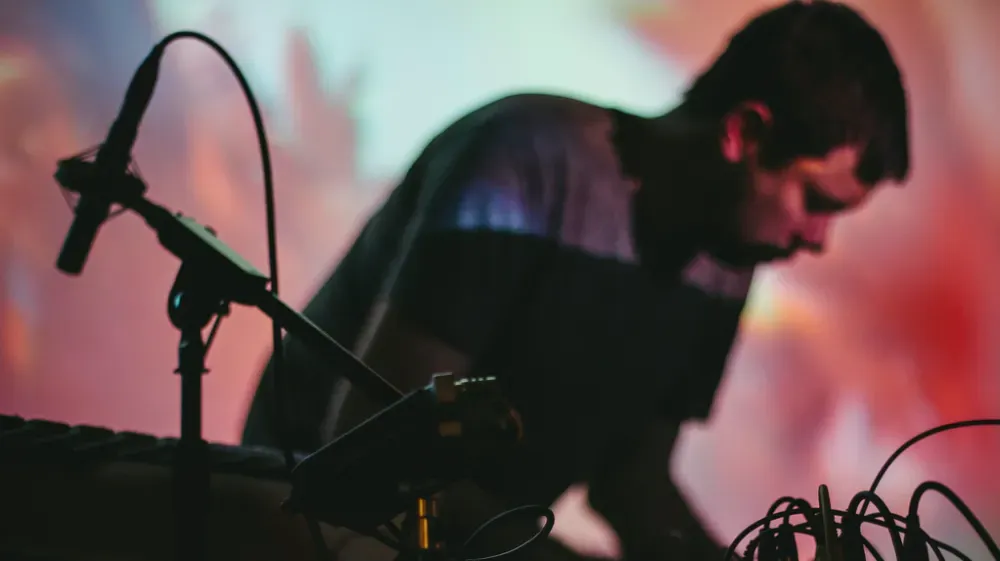
Marcus Fischer
In my work, what’s makes a good field recording is a question that depends completely on the specific piece I’m working on.
A good field recording for me might be a technically awful recording but one that brings up a memory or has a specific texture I was searching for. When searching for a field recording to process/manipulate I tend to prefer recordings with a bit of grit or texture in it and not something that accurately represents the source that was being recorded. I want something that has a little tooth to grab onto. Something where even the quiet parts carry sound. Many of these are sourced from cassette recordings or voice memos. They are recordings that were captured in the spur of the moment and not something I went out looking for. In borrowing a bunch of photographic analogies to describe recording, these are snapshots, shot from the hip without the time to compose or expose the picture properly.
When I’m working on immersive work or something that is really trying to accurately represent a place or location I tend to use binaural recordings which basically places microphones right where your ears are located and spaced. Either this kind of binaural recording or ambisonic recordings made on a really nice recorder will go a long way towards creating this kind of very detailed and accurate descriptions of a place. These are like landscape photos where you waited for the right light, paid careful attention to the composition and the exposure and made something panoramic.
When making and using field recordings I’m always looking for something that I couldn’t have controlled or something I couldn’t have created on my own. It’s a chance encounter with sound. It’s an unwitting collaborator. It’s a sound library. It’s rhythm, texture, and melody. It’s music.
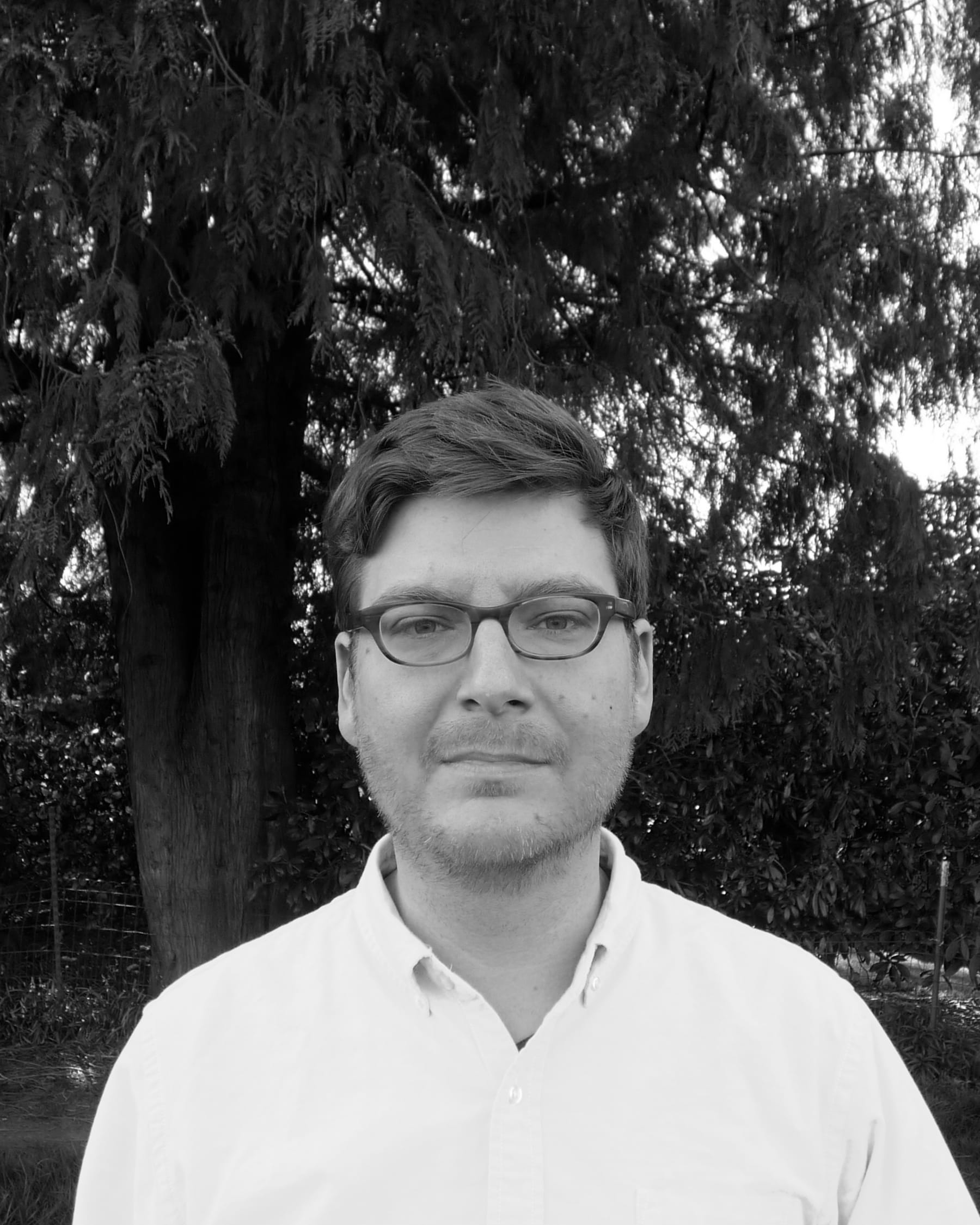
William Selman
I’m going to set aside technical aspects of field recording. If your goal is documentary or ethnographic, it can be essential to have the right tools and technique to capture a sound or setting with the greatest level of accuracy and detail. However, my goal is capturing raw material. Sometimes I have the time and ability to do a proper set with good gear, but sometimes capturing a sound with a simple handheld recorder or even an iPhone is better than not capturing it.
There’s a misconception that with field recording you are capturing a “perfect moment” that stands on its own merits (I suspect this may come from Cartier-Bresson’s ideas about street photography, which has many parallels with field recording). In my experience, it’s very unusual to make a field recording that stands on its own merits as an interesting piece. I’ve been recording sounds for over 25 years and I can count on two hands recordings that would fit that criteria.
Instead, I tend to go about capturing sounds that fall into two categories:
- Ordinary sounds that blend into the background of our attention but with a more intense focus of attention can be interesting
- Sounds that are unusual to me as something I haven’t heard before or recorded myself
Listening back (and there should be a lot of deep, attentive listening) recordings usually do not stand on their own as “finished” or worthy of aesthetic value (to me anyway). Rather, it’s all raw material of timbre, rhythm, texture, and more often than you realize tonality. Thought of in this way, field recordings are like instruments, but where technique, expressiveness, and (ultimately) intention are deployed differently.
As a result, a good “finished” field recording is composed (and intrinsically “artificial”): a product of imagination through combination with other recordings. The process of composition for me happens when you select raw material and edit it, transform it through various processing digitally or via analog means (never underestimate the humble EQ), and spatializing/mixing it with other sounds. Mixing sounds is the moment of birth when juxtapositions of your raw material can create an atmosphere, highlight a sonic motif, or generate something beguiling and unheard.
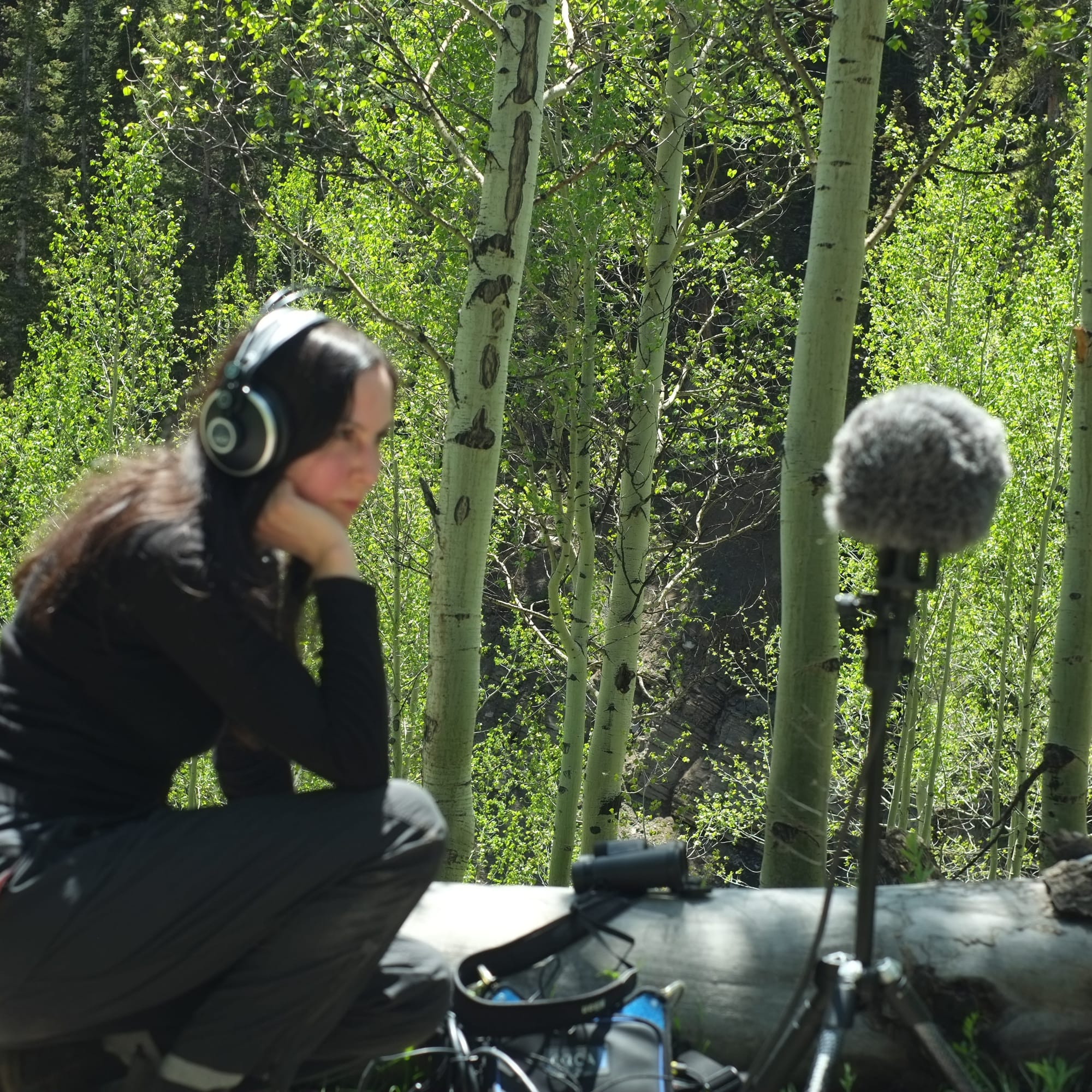
Patricia Wolf
A good field recording inspires you to listen deeply and be present with it. Perhaps there is an intimacy to it, or an expression of freedom that is rare to find or notice outside of that recording context. A good field recording shares something with us that we may have overlooked in our own listening or shares with us the sounds that we have heard on special occasions that bring us so much fascination with our world.
In most cases, when I am out field recording, I am open to whatever the world has to offer on a given day in a specific place. It’s that openness and careful listening which is a part of the practice which makes it such a magical activity. In some cases, usually when I am working with someone else, an organization or a cause, that I am foraging for a particular sound.
For example, I am a volunteer for the Harborton Frog Taxi which helps northern red-legged frogs safely migrate to and from their breeding habitat. I was on a mission to record them singing underwater with my hydrophone. I was able to do it after leaving a mic and recorder set up overnight during their breeding season and that was so exciting to listen to the next morning. There’s a real separation between the underwater sound world and the above water sound world. It was really nice to compare those different soundscapes. I guess what I am searching for is to learn something new about the world around me and to also spend time thinking about where, why and how all of these sounds are existing.
Artwork for this week's edition of ITR is by Niki de Saint Phalle, which is part of the exhibit Radical. Realities. opening today at the Kunsthalle Mannheim.